I. A Clear Day And No Memories
People are celebrating the new year by flipping back ten. This feels, to me, as obtuse as it is unimaginative, for one can draw a very straight line from that period’s specific surface thrall and algorithmic naivety to the rabid conspiratorium of the present.
By 2016, did anyone still believe that social media was democracy at work, a transfer of power from the institution to the individual?
Maybe, some of the individuals did. On my side, the media side, we knew the power exchange was still strictly institutional; what was different was that the new institutions, Facebook chief among them, could claim they were nothing of the sort. They weren’t publishers! They were merely facilitating the interchange of self- and group expression.
Really, by 2016, what they were was an incredibly sophisticated ad targeting platform with near-infinite supply and an unprecedented ability to influence demand. Like most media companies at the time, the vast majority of Facebook’s revenue came from advertising – and my god, the competitive advantages they had, compared to publishers! You could build incredibly specific targeting segments along any combination of interests, age, gender, income, net worth, education, dwelling type, relationship status, political affiliation. You could, if you were just a little bit canny, find out which combinations of medium- to high-scale attributes were predictive of receptivity to a particular message, or ideology. Not only that – you could then run your creative against these segments and find out exactly how many of those exposed to the message had taken whatever action it was you wanted to them to take (provided the action was digital), because there was almost no chance you didn’t also have facebook tracking pixels on your site, in your order forms, on your conversion event.
All Facebook had to do for this incredibly powerful ad targeting to work was to keep its userbase engaged – and the simplest way to do this was to give users more of what they were already engaging with (Zuckerburg was no David Simon; if the audience wanted dessert, by gum, dessert was what they’d get).
That was the door left propped open for publishers: to supply the news feed algorithm with content that would contribute positively to Facebook’s daily active users or total minutes spent or both. It’s of course easy enough, in hindsight, to get all Patrick Henry about this.
Are we disposed to be of the number of those who, having eyes, see not, and, having ears, hear not, the things which so nearly concern their temporal salvation?
But it’s not like there was a day in 2016 when outlets that had been covering corruption and abuses of power suddenly stopped, en-masse, in order to map personality traits onto Grease characters and suss out whether a dress was blue and black or white and gold. Any place that believed in Dooley’s maxim before the phrase “news feed algorithm” entered corporate consciousness still did; the news feed stuff was AND, not OR. The difficulty was in getting people, or enough people, to read AND, considering OR was right there, and it was breezy and silly (dessert!) and made you remember that period in your life when you wore polo shirts stacked one ontop of the other, and you knew that your friends – your real-life human friends, whom you maybe hadn’t seen in a while, real lives getting in the way and all, would like it, and it would be a moment of connection, however fleeting.
It was fairly early in that year, I think, that I went to see Wonder, at the newly reopened Renwick Gallery, in Washington D.C. Each of the gallery’s nine rooms was given over to a single, large-scale work that functioned as an immersive tromphe l’oil. One room held craggy, huddling masses that were constructed from thousands of index cards; another, a giant tree trunk you walked under and looked up through; sunlight dappling through each reticulated segment. The one I remember most vividly had walls of hibiscus and glittering celadon; the celadon pattern, upon close inspection, was made up of beetles, ranging in circumference from a pin head to saucer.
The exhibition notes do not say whether Wonder was also intended as a commentary on things not being so photogenic and simple up close as they might seem at arm’s length, perhaps because when is that not the case? All that had changed was that some of us had forgotten.
II. We were very tired, we were very merry —
In mid January, Irving and Brady and I go to Santa Rosa, for a wedding and a chance to escape the Jadis winter we’ve been having. Irving, who has never been on an airplane, is awed by every little thing, starting with the terminal E garage, the moving sidewalks, a chunk of disinterred cobblestone. He eats a half-pound bag of lifesavers before we hit cruising altitude – my ears are so clear! he exclaims. He watches ten minutes of 30 different movies; mostly, he watches the map tracking our progress west. So that’s North Dakota!
We land and drive north, a route that takes us into San Francisco proper, in clogs and fits and spurts; it’s not three in the afternoon but it’s a friday and a sunny one and the roads are jammed. The dense california sun overwhelms Irving’s eyes, which are like Brady’s, a light sea blue. Did you know that bison live in this park, I say, as we inch along the eastern rim of Golden Gate Park. I am pretty sure of this and then wonder if i’ve made it up, but it’s true: 10 bison have a few acres fenced in on the southern tip of the park.
Irving takes the invisible bison as a matter of course. What he can’t believe is the green. The meadows and the grass under the trees, along the median, anywhere there is grass at all: poison green; how could grass in a city in January be so green?
My friend Ann and her husband live in the hills above Santa Rosa, in a house that is built stepwise into the rock, so that it sidles among the trees and profligate shrubs. Irving and I, up early, explore before the sun has even begun to rise, looking for cacti and palms. The sky is a furry indigo, Venus and Jupiter dipped out of sight; the brightest thing around is a neon pink flamingo, perched atop a motel in the valley below. I’m looking at the flamingo, kind of, and half listening to Irving’s ceaseless stream of observations; a question slips in without my noticing, right, I say, or mm, and something damp, palm-warm brushes my fingers, which retract. Mom! You dropped it! Dropped what? The ingredient! Irving chides. And we are fumbling around for the little aloe leaf, which I find and Irving puts carefully into his own pocket, the one not sagging from a hockey puck and six or ten bits of gravel.
Later, we drive to the coast, jagging west through Sebastopol and tiny Freestone and Valley Ford, with its one-room, shotgun school house.
Sebastopol is a charming place, a gold rush outpost with soil particularly amenable to growing stone fruit and potatoes. It’s hard to believe that a prolonged bar fight could occasion the recently incorporated town of Pine Grove to be renamed after the besieged Crimean capital, but that’s the story the town is sticking to, and why not? It reminds me of Leadville, in its mix of victorian and revival and prairie-style architecture, and in that it was probably truly hippy or at least spiritual for a good stretch before it went upscale, so that now the fancy little market says natural foods and the bookstore hosts tarot readings and there is a place to get $100 crystals and home sound baths, and all the shops are decked out in turquoise and lilac and lemon yellow. The fretwork and coast live oaks cast dancing lattices of shade across the sidewalks, and then quite abruptly the sidewalks end and the buildings drop away and we are in ranch country.
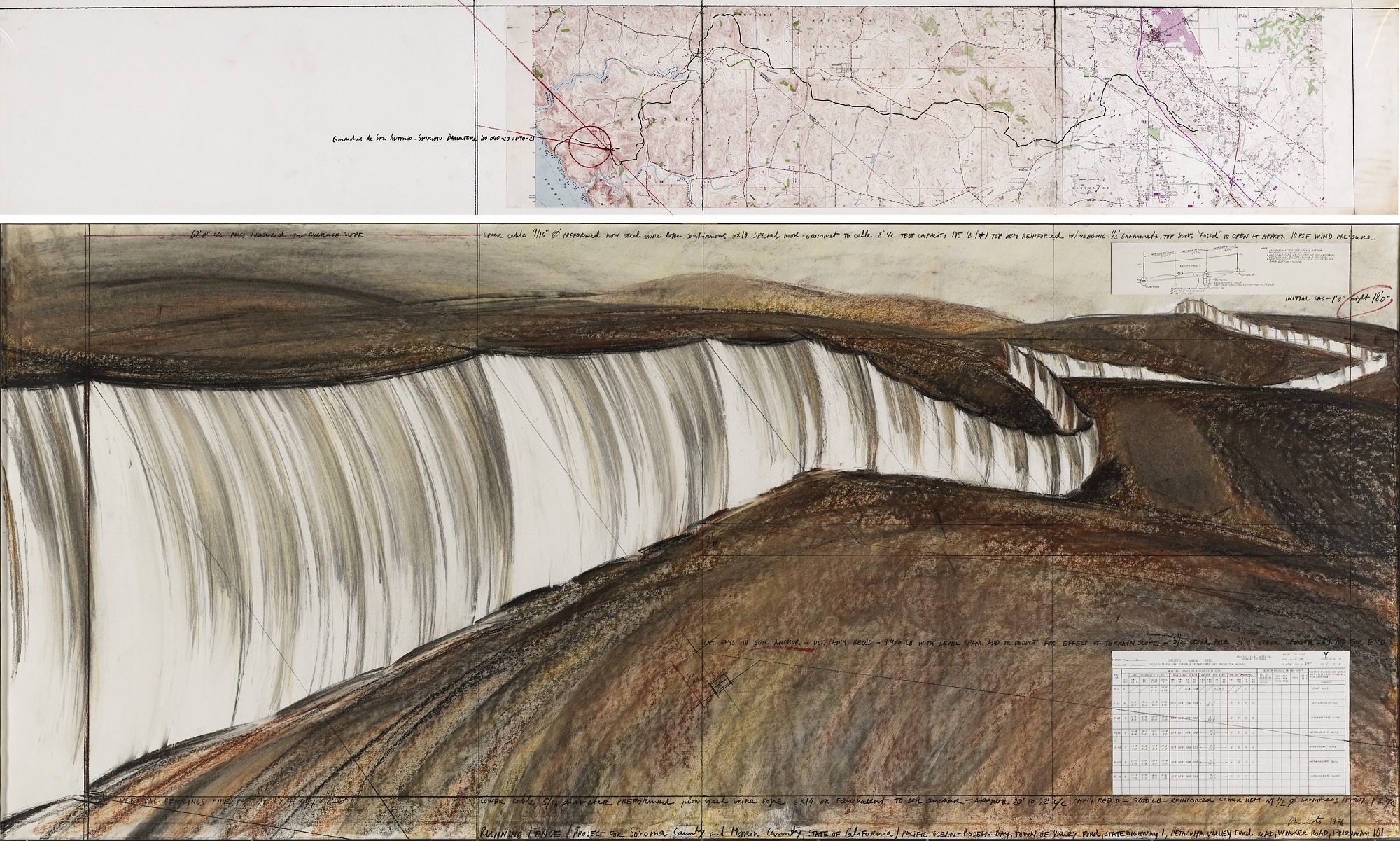
We drive through acres and acres of grazing land; the grass so close-cropped every ebb and ridge of rock underneath is visible; it reminds me of Newfoundland, only with baby lambs and without the stunty pines. Some of the rock formations are bulbous, oddly smooth; a pair guard a bend in the roadside; guard is the wrong verb, I’m sure (for one, the rocks were there first), but there is something deliberate about the placement, these bulbous columns atop plinths.
I had forgotten that this is what driving out west can be like: the landscape swallowing you up; making you forget, almost, that there is a you at all.
It is still misty, whipping wind when we get to Dillon Beach, and I go for a run around the cove while Irving and Brady explore the warren of cypress and boulders along the cliffside. It’s high tide, high-sediment sand, and I run on the hardest pack I can find, ducking underneath the surfcast lines. Dillon is an off-leash beach and all around the dogs are gamboling so it puts any prior image of that word to shame. The shoreline curves and then narrows sharply. Here, people are actively fishing, reeling from the shore, mostly, though a few boys not much older than Per are hip-deep in the bay, snare-casting for crabs. A pirate flag waves above the spot where the beach begins to widen again; it occurs to me that I don’t know where and if the public part of the beach ends, and I cut back along the dunes and through a RV and camp ground that is, on this breaking-nice day in January, fully occupied, with families calling out gaily to one another as they unfurl and stake awnings and inflate kayaks and upend five pound sacks of ice into coolers.
There is something in me that resists the heaping of pleasures when the heaping requires additional foresight or logistical effort. I would never think to pack a nice hamper for the beach, let alone a tent or an entire small, rolling house. I have always been this way, and my friend Ann has always been the opposite. Why wouldn’t we leave a winding down party in someone’s dorm room to take a cab to a train to a ferry to Fire Island, where we could watch the sunrise? And we’d stop to get bagels on the way, because it was January, and nothing on Fire Island would be open. If it turned out that the ferry itself wasn’t running, because, again, it was January, but an obliging fisherman was amenable to taking us into the sound instead? Did we want to stop by his mother’s seventieth birthday party before we headed back to the train, because the fisherman’s sister was making porchetta?
And the whistles kept blowing, and the dawn came soon
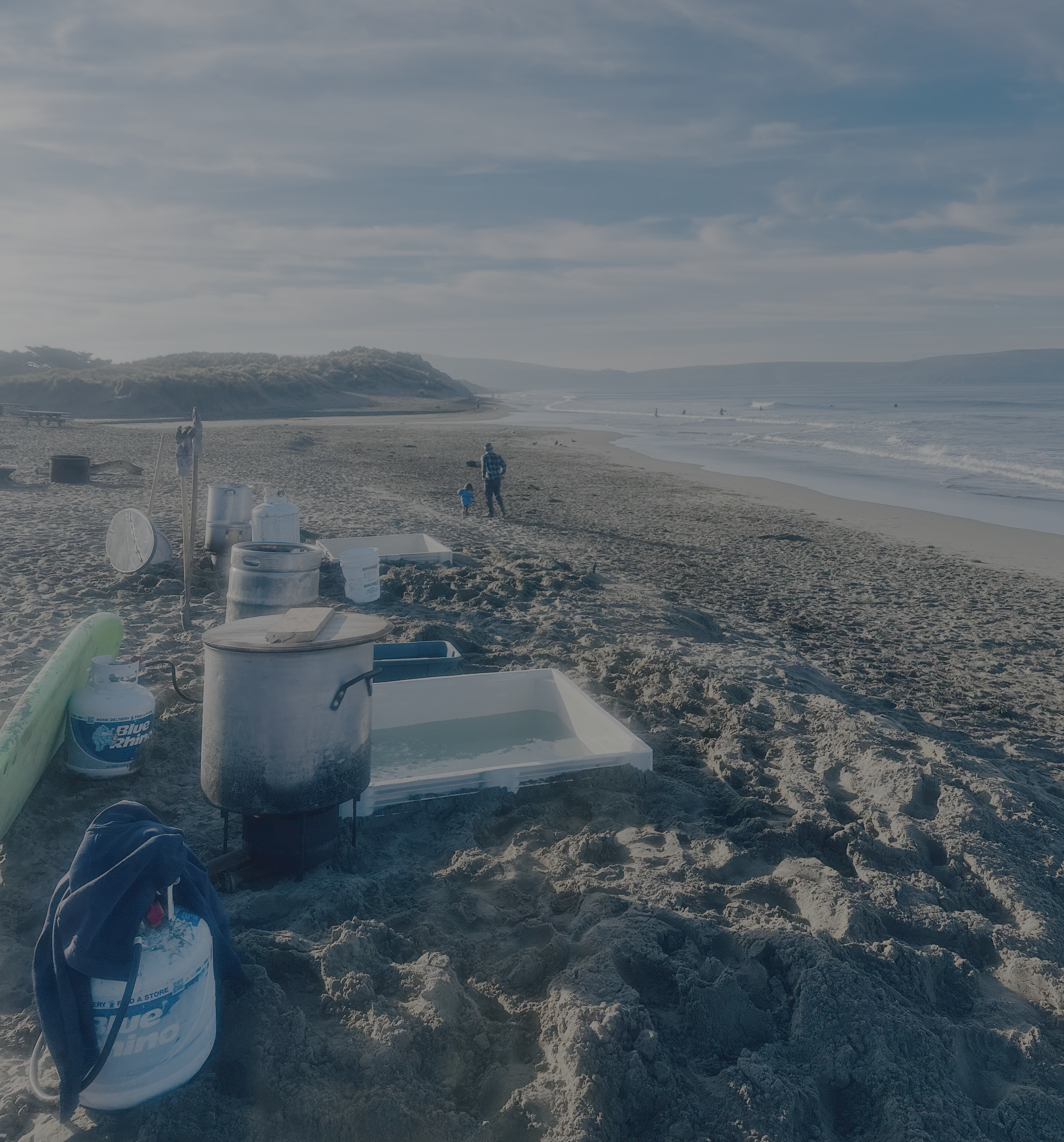
Ann’s friends have spent the morning creating temporary in-ground (in-sand?) hot tubs: digging two large trenches, lining them with vast plastic tubs normally used for crushing grapes, and then hauling many, many four-gallon buckets of water, which is heated to near boiling in giant lobster pots. They’ve been doing this once a year for a few years, now, on New Year’s Day when the weather holds; otherwise, on the next fine weekend day. It’s much nicer to plunge if you have a hot tub waiting on the other end, one of the men says, earnestly.
The prior Saturday, Perry and I had done a polar plunge in our town lake, which involved hatchets and ice saws and left me, for a few shocking moments, insentient.
Oh, we aren’t going to go in the water, I’d assured Perry, when he’d called us that morning. It will be wild waves – too cold; too ferocious.
But this water, if past bracing, is peaceable, and the ambient temperature is sixty degrees and rising. I am barely shivering by the time I’ve climbed back up the dunes.
Irving and Ann’s daughter sprint from tub to sea to tub for hours; the tub gets so it is half sand; the water barely lukewarm – they keep going. All afternoon, people arrive, most of them young families; everyone is a geologist except for one woman, who is referred to by someone else as a duck farm heiress. It is 50/50 to me, a stranger, as to whether “heiress” does or does not have quotation marks. They come with surfboards and beach blankets and guitars; the duck farm heiress brings a cooler full of duck legs and long roasting skewers. There is a surprising amount of turquoise, in checked short-sleeved button downs, in trucker hats, in long, board shorts, sopping wet. (The maybe heiress an exception, in her aran sweater and rigid denim.)
I sit on a blanket with my friend Nic, who tells me about the elephant seals she saw at Point Reyes that morning; the beach was teaming with them; you couldn’t get that close to the water because there were so many.
The seals arrive on Point Reyes around the start of the year. This migration – one of the longest mammalian migrations in the world – is a solitary one, a grim midnight march unfolding hundreds of meters below the ocean’s surface, below what is tolerable for a great white shark; where only sperm whales go, and they not often. (To survive as an elephant seal is to abide by the lightscape of fear. )
The males arrive first, large, still, from gorgeing off the squid that can’t help but proliferate around the continental shelf. There are a testy few weeks of chest-bumping and probosis thumping until a pecking order has been more or less settled on, with the victor getting choicest rookery and thus choice of rooked. The females come from points north and east; some have been traveling since October, some, since August – but they all arrive within one fortnight, and give birth within a day or two of their arrival. Elephant seal algebra!
On Nic’s phone, the elephant seals look like boulders, like they could harbor tide pools.
Irving barrels towards me, come see come see! The tide’s gone all the way out. He shows me a sea star, as rough and aubergine and barnacled as the rock it clings to that I’d have surely missed it. One pool over, a fandango of sea urchins. I watch one hermit crab crawl ponderously into a small pool in the divot of a rocktop. Brady shows me a brace of sea anemones, dun-colored, on the farthest rock. I place a finger in the dimple of one of them and it recoils; its muppet hair tentacles tacky, surprisingly rough.
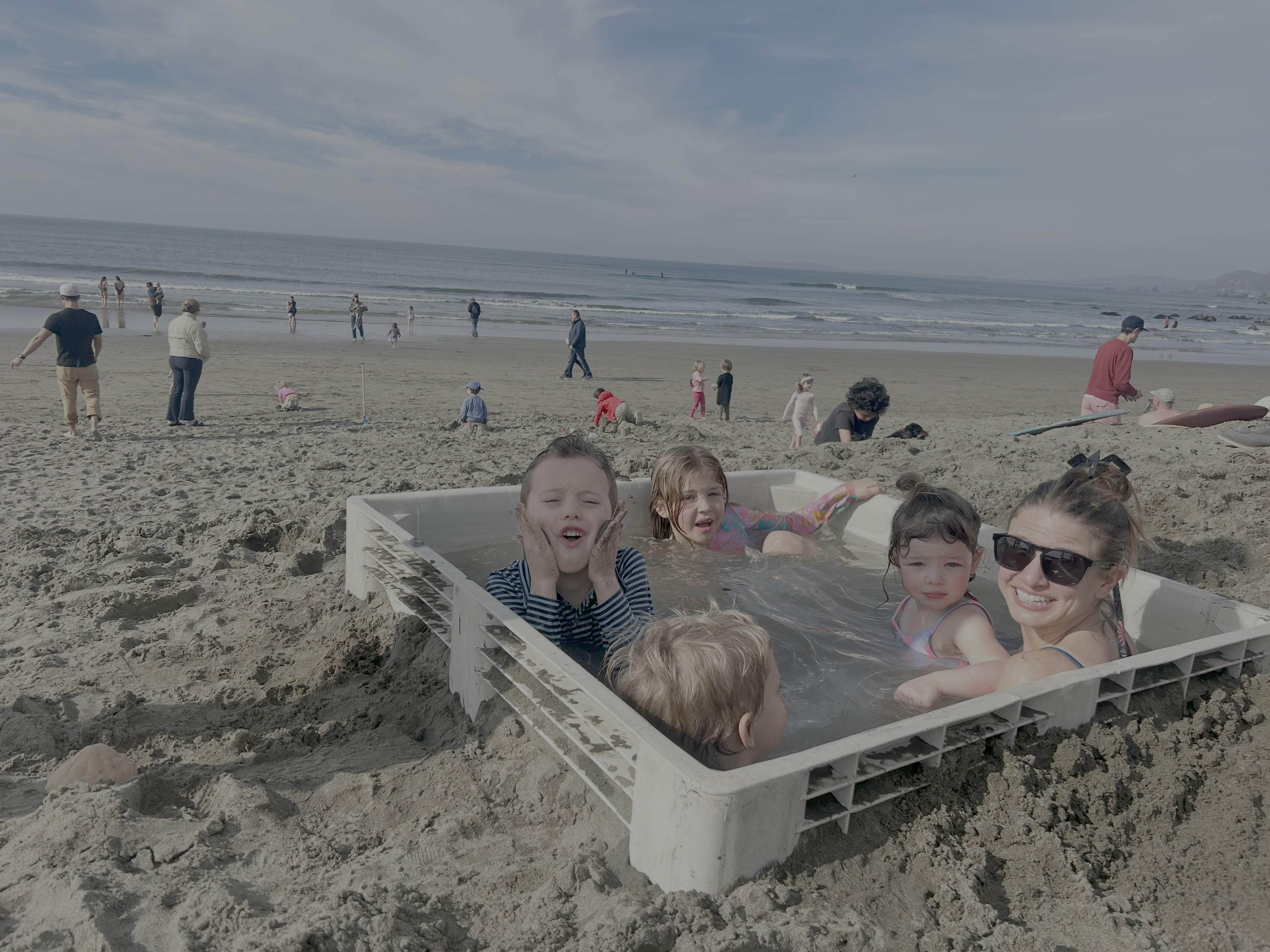
It is time to get going, or past time; Nic and I follow the others desultorily, looking back at the tidepools, ahead at the gamboling dogs. I am carrying a plastic bucket containing the two hermit crabs. Ann is in sand colors, shorts and a sweater; her baby on one hip. Sixty degrees in mid-January, sunlight slipsliding about, all these people rejoicing in these abundances – that is what I like: that this isn’t rare, and is celebrated anyway. I pick up the baby’s discarded pink sunsuit and upend the bucket.
III. Some Art’s About to Happen
This winter has been an escalation of cruelty and erasure of pretext; the weather has not quelled the dissolution (or, it has, and this — the broad daylight executions of two protesters, mass round ups, detention camp for the children of detainees, a tomahawk dropped on what was very obviously a girls’ school, on what was very obviously a school day — is what quelled looks like; this is horrible to imagine, but not impossible; if only it were impossible).
Still, not everything American is awful, or grim, or brave responses to awful grimness.
I read Jill Lepore’s review of Dan Chiasson’s new biography of Bernie Sanders, which is also an ode, if unsparing, to Sanders’ long-adopted state, so much of which really does look much the same today as it did in the post-war Vermont Life promotional brochures, though it’s not clear that the state’s official commitment to “preserving the landscape for tourists” has left its own, dwindling population better or worse off. “Today, you can board Amtrak’s Vermonter at Penn Station, heading north, and I promise you’ll know when you’ve crossed the border into that brave and beautiful and hard-luck little state,” Lepore writes.
Coming along route 22, as we often do, a visitor might be less sure of where New York ends and Vermont begins (the farmhouses, greek revivals and second empire, alone and set back from the road, have fine bones and slate roofs and peeling paint on both sides of the Hoosick; both sides are poor and still mostly agrarian), but maybe not. Even in that humble crossing, the hills begin to stretch out as you nose from North Petersburg into North Pownal; the valleys bowl, and a lapidary quality inflects the light – not just in early October, when it’s all undulant orange scarlet green white, but in February, when the snow is still thick on the ground and hangs to the bare branches of the trees in light clumps, and in June, when it speckles over with pollen and alights, for capricious stretches, the shadowiest of corners.
“Brave little snowy muddy fierce little mountain state,” she writes, in closing, and don’t you hear the catch in her throat?
******
I don’t know anything about figure skating, only that it is a brutal sport, brutal and cruel, where the intensity and physical demands, the isolation, seem too often to overpower any joy. To watch a skating performance is to watch mental turmoil play out on a physical body, and of course this is true of so much elite athletics, but figure skating is part performance; part of the performance is to exhibit no emotion, no strain.
We tune into the women’s free skate just as the Estonian skater Niina Petrokina nears the end of her program. She looks strong, in control. She finishes and her tears, as she comes to a stop, are triumphant – she has come back, we are told – but they are not, or do not seem to be, jubilant. The camera pans to the American Amber Glenn, sitting in first. She, too, has come back from a disastrous short program. Are you happy about your performance, she is asked. I am making myself feel happy, she says. She does not look happy; she looks embattled, like she is determined to keep herself together until she can be alone.
But the next skater, the Korean Haein Lee, is different. She comes out to the camp classical drama of Carmen, ba-dam-bum-bum, smiling; she smiles when she lands her first double axel-triple toe loop, ba-dum-dum-dah! She beams off her spins. When she finishes, she flops back, dramatically, upon the ice, pink-cheeked and giggling. She is in third off that performance, Amber Glenn still firmly in first. Why don’t more skaters choose happy music, or music that makes them happy? The next skater, an American, falls on her first jump, skating to some dour, somnolent opera. On the way to break, the camera bounces to a woman in a gold costume, waiting in the wings. She has over-ear headphones on, and is bopping her head, dancing with herself. She catches the camera’s eye and grins, briefly, then resumes dancing.
“Still to come: the American, Alysa Liu,” the announcer says. I don’t know the name; it is the bopping that strikes me; like she is getting ready for a night out.
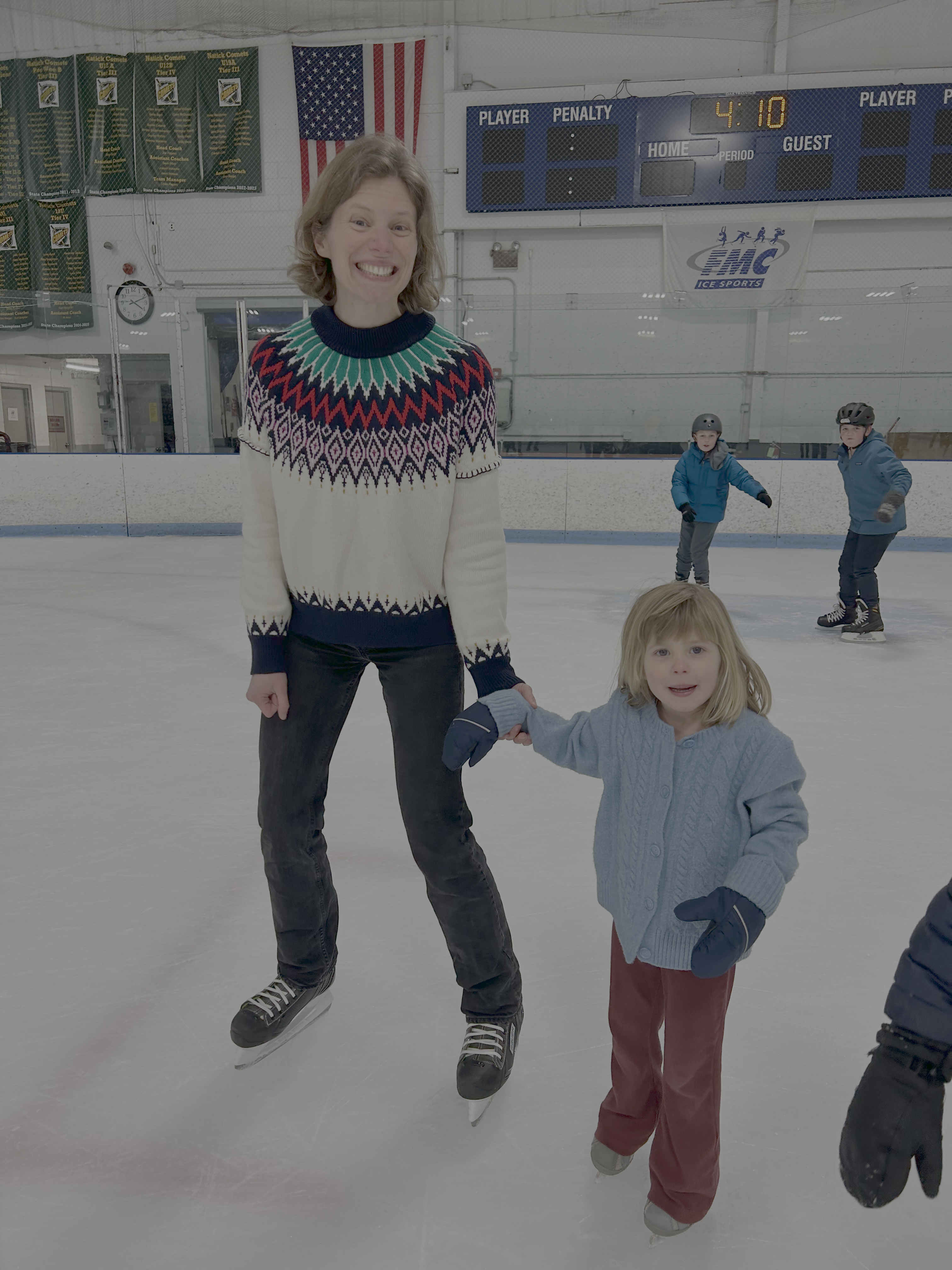
What comes next – well, you’ve probably seen it. I’ve never seen anything like it, which means nothing, but also seems to be the general consensus. Alysa skates to Donna Summers’ MacArthur Park; it is gorgeous, technical skating, sure; at one point, she flies backwards into a twist into a mirror leap on the other leg; it is incredible; incredibly acrobatic – but also, she slides and spins on her knees around the ice; she jumps into a split and does what i can only describe as a jig; she flips her hair. That song is a chimera; it can be a long, sweeping lament; it can be a soap opera elegy; in Alysa’s performance, it was a celebration. The arena, quiet at the beginning, begins to clap and then to stamp and holler and cheer, as if it is a hockey game, or a Beyonce concert. This is not a case of not knowing until after that what she has done is something people will watch on replays for years to come; that moment – you can see when she does know it, when she flips from confident and excited to exuberant – happens two minutes in, after she lands a super loop that flows into this umbeled whirl, one skate grasped in one hand, around and and around and around. The music picks up, then; she does a little hip shake; she is absolutely dancing with abandon thereafter.
If the olympics, as a whole, offered some temporary compartmentalization, there is, in Liu’s performance, something not so temporary; something hopeful and galvanizing in its optimism. Here was a woman who had broken free of a system into which she had been placed as a very young child, by people much older, with more power than she. Who had conceived of and pursued a diametrically individualistic approach, and then shown it could work far better than what proceeded it. Was this not American?
An immigrant’s daughter, Oakland-born, tiger-striped hair, centripetal, dynamite with a laser beam, suspended above the winner’s podium, stadium lights glinting off her grill.
I make the kids watch the replay the next morning. “I could do that,” Irving says, several times. But Ottelie is silent, rapt.
Spring was never waiting for us, dear /
It ran one step ahead –
 éclaircissements
Leave a comment