I: A recipe for salt dough ornaments
Ingredients:
1 pt salt : 1 pt water : 2 pt all purpose flour
(1c salt, 1c water, 2c flour will give you roughly two large baking sheets of ornaments, with some room to play around)
Equipment:
- Rolling pin
- Cookie cutters
- Baking sheets
- Parchment paper
Steps:
- Preheat the oven to 250 (if you live at sea level)
- Mix the salt and the flour
- Add the water in sloshes. Mix the dough after each slosh. It will be very crumbly at the start, and then go tacky, and then smooth.
- Let the mixed dough rest for a few minutes before you roll it out
- Roll out the dough, using a little extra flour if it’s feeling wet (you want it to come neatly off the countertop)
- Stamp it with whichever cookie shapes you have on hand
- Pierce each shape clean through with a nail or a metal meat thermometer or any narrow bit of metal (this is the hanging hole)
- Bake on trays lined with parchment paper for about 2 hours, or until ornaments are hard.
Salt dough ornaments are technically edible before they’ve been decorated, but will mostly taste of salt.
We decorate ours with acrylic paint, which is messy, glossy, and durable. The ornaments will last a lifetime, or slide off the tree and snap. If you have a dog, the dog may try to eat them.
******
I make salt dough ornaments every December. Some years, I make a bunch and we invite people over to paint them. Some years, I make a bunch and only we paint them. They last forever or until broken or mistakenly eaten, so extras just go into the ornament drawer (which is also the drawer of rarely used large pots) until the following December.
On the off chance anyone is searching for a salt dough ornament recipe and lands here: all the information you need is in the section above.
(The media industry substacks and newsletters I read keep telling me that AI overviews will be the deathknell of recipe site backstory ad slottage, but when?)
II: Salvage the Bones
Why am I writing about December at the start of February? The drugstores haven’t even brought out their easter basket linings.
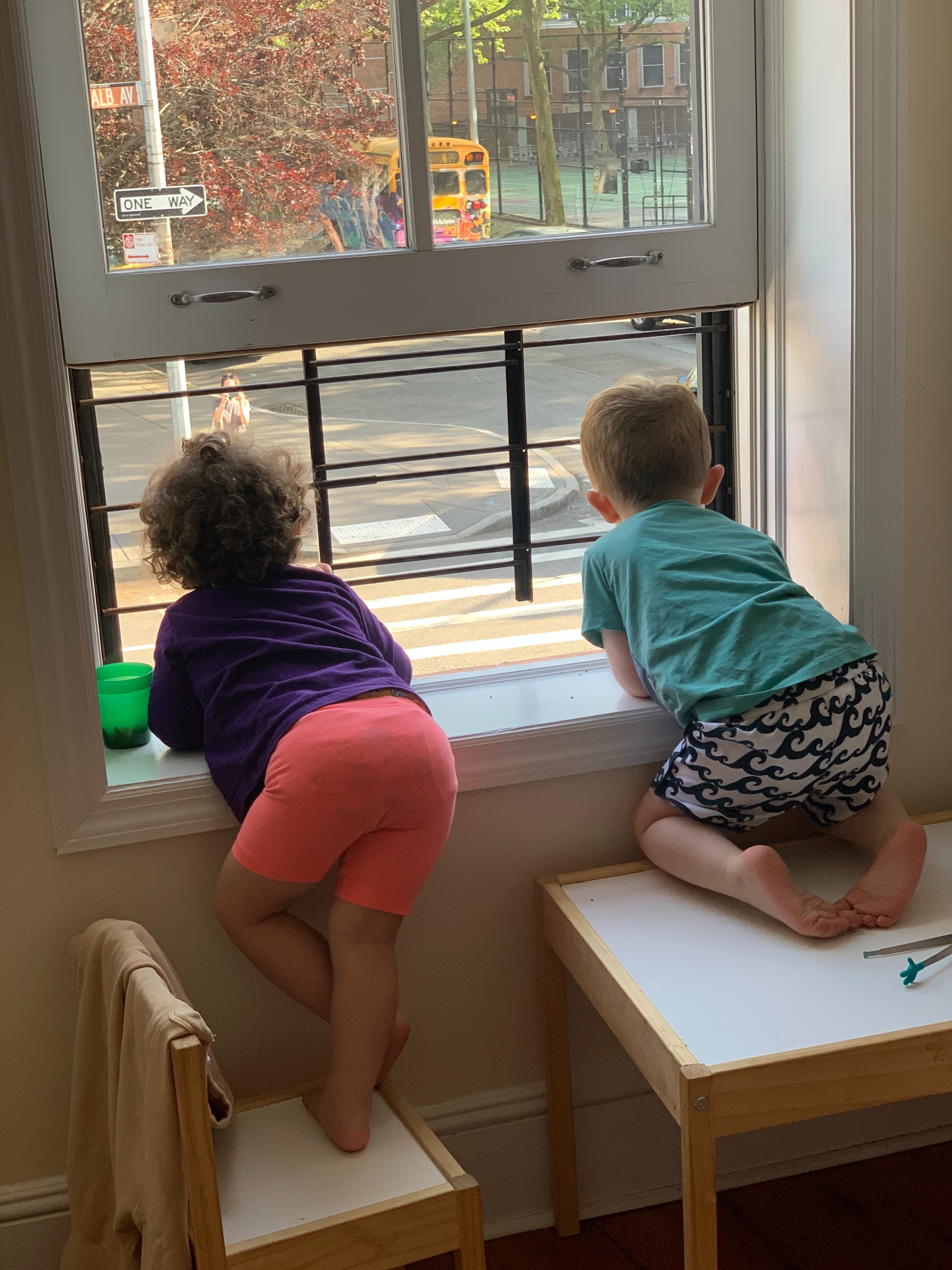
It’s been a real winter. Inexorable. Three snowfalls under our belts, and maybe that’s nothing to a Mainard, a Boulderite. It feels, here, notable. Dry, adamantine snow; the kind that resists shaping. Nonetheless, we’ve got one omnibus wall out back, and one, more considered, with a tunnel for entry, around the big sugar maple out front. I taught the boys to wet the snow down with spray bottle so the wind wouldn’t worry it away. Listen, it works. A bear could make it through that tunnel.
Early in the month, P was off from school, and we went to the Peabody Museum. That was his request; we always go to the natural history museum instead; the Peabody is in the same building, off to the right, past the room with all the geodes and minerals in their glass cases, the hunk of asteroid too obdurate and heavy to be a flight risk. We don’t go to the Peabody because we always go to see all the taxidermy, the giant pill bugs and great, gilted quilt of hummingbirds, the magnificent frigate bird, the whale skeletons hanging from the ceiling. The baleen is dark and stiff, like horsehair, and doesn’t span the full jaw, like I’d always figured it did.
But P wanted to go to the Peabody; he’s old enough to go to slow burn museums now; he wasn’t even bored in the first room, which was just a series of historical kitchens and a 1910 recreation of a dining table at Harvard, with just as many forks as you’d expect. Like Titanic, he said.
The second room was devoted to the indigenous Latin and South Americans. The Incans and the Mayans. It wasn’t a state school holiday, only a local one, and P drifted towards a class grouped around a diorama of a ziggurat. I paused before another diorama, this one showing the Incans in their longhouse, preparing ceremonial tea. Some had already partaken, and were lying in hammocks, or slanted on the ground. There weren’t that many diaoramas; maybe there was nothing wrong with highlighting a tea ceremony. Then again – and maybe I was being overly fussy, performing to myself – but it wasn’t like the diorama was conveying what it was like to commune with the spirits. And surely that would have been more interesting? These were little diecast figurines, slumped over, in states of physical vulnerability.
The Peabody has more than a little sunk cost defensiveness about its own existence. Like most of the museums at Harvard, it is the public tip of a private iceberg. The museum’s brochure will tell you it has the largest collection of indigenous artifacts in the world (1.2 million), but not that many of these are as yet uncatalogued, mouldering in milk crates in an offsite warehouse. There is a strained acknowledgement of a “complicated and sometimes difficult” history – for the artifacts, many sacred, were taken (sorry, “collected”) without permission, or under duress – but this is quickly brushed away with assurances that the museum, in its current rendition, is devoted to “ethical stewardship.”
[Nowhere does it say that among its collections are the remains of more than 22,000 people, including those of a 17 year-old African boy named Steaurma Jantjes, who was kidnapped by PT Barnum and brought to Boston, where he was made to serve as a live exhibit. The experience pushed him to suicide.]
About a dozen cataloguers work in the Peabody’s vast storage annex. To be twenty three and surrounded by so much freighted history, tasked with unpacking and describing anything from funeary beads to death masks to baby teeth, and under no direct pressure to rush through it – that’s a story I would read.
We went upstairs, where there was an exhibit of anthropological exhibitions from the 1893 World’s Columbian Exposition, otherwise known as the World’s Fair, which was held in the then not quite sixty year-old city of Chicago.
The closest contemporary analogue to the World’s Fair is the Olympics – the boosterism, the broad and uncritical patriotism, the distillation of a omniglot and loosely associated people into a single identity, with simple, differentiating traits. But the Olympics is a competition; the entertainment value is derived from watching the very best versus the very best; the objective of the Worlds’ Fairs was to bring fame and fortune to the host city, and the way to do this was to offer up as many slants of amusement – the dazzling, the comic, the lightly educational – as could be possibly squeezed into a square mile.
This was the fair that birthed the Ferris Wheel, the movie theatre and the dishwasher, and, more prosaically, spray paint. In its six month run, it drew – no joke – 27 million visitors to its Olmstead-designed grounds. It was also a tipping point for American anthropology, but its architects allowed for divergent visions of what, exactly, American anthropology was, and whom it was for.
There was a camp that felt indigenous people were in need of protection, and that preservation of their culture was critical to their continued existence. Frederic Putnam, then the director of the Peabody, who’d been asked to curate the exposition’s Anthropology building, really did believe this; his team assembled models of Kwakiutl wood villages, and models of the restored serpentine mound, in Ohio in the hopes of engendering compassion and alarm amongst fairgoers and critics and visiting plutocrats.
On the other end was the manifest destiny: indigenous ways of life were an affront to progress; native people must be assimilated or else wiped out. This was the view of the US government – whether out of convenience or zealotry hardly mattered; both had the same demolitic effect.
Many of the fair’s curators had more of a wunderkammer view: western civilization was, obviously, superior, but the rest of the world – the primitive south, the sultry east – had some funny, curious, even marvelous habits, the shiniest of which could be gussied up and put on display .
And so, for every conscientious life-size diaorama and Kwakiutl wooden house, there was a Buffalo Bill bull riding exhibit, a cliff dweller replica assuring visitors that all that remained of the dwellers themselves were the bones and skulls, a famous bronze statue of a native american hunter with his foot atop a slain bison. “The Closing Era,” the name plate said. And there was the Midway: a full mile of model villages and villagers: thatched Jakartan huts, a little Cairo with camels and a belly dancer, Bedouin encampments, a Japanese bazaar.
The 1893 World’s Fair told a story over and over, hammered it in with layout and naming and paint colors: society spiraled down from the west.
A friend, the day after the election: how do I make sure my son doesn’t grow up to be an asshole?
I said what I thought, which was that he couldn’t possibly, with her as his mother.
Still: I thought of the glass and brass cruelty, the self-conscious vacuity, the deliberate, casual pugilism so on display in Brock Colyar’s recent cover story for NYMag. All these murray hill and georgetown and south beach twenty somethings –“crypto nerds and influencer girlies and recent MAHA converts and gays of all stripes, plus your standard-fare Rogan-listening bros” who pair their red hats with shiny blue suits and strapless dresses and take American Psycho straight. Aspirational. (I’m URBAN, one of them emphasized. Proof: she lives in a condo. She goes to Casa Cipriani.)
A lot of trump fans really do hate vaccines and immigrants and pronouns and trans kids and love some contorted version of god; some of them (a lot of them) really do think god is fucking SPEAKING through trump, but the young – the young don’t believe in anything except power.
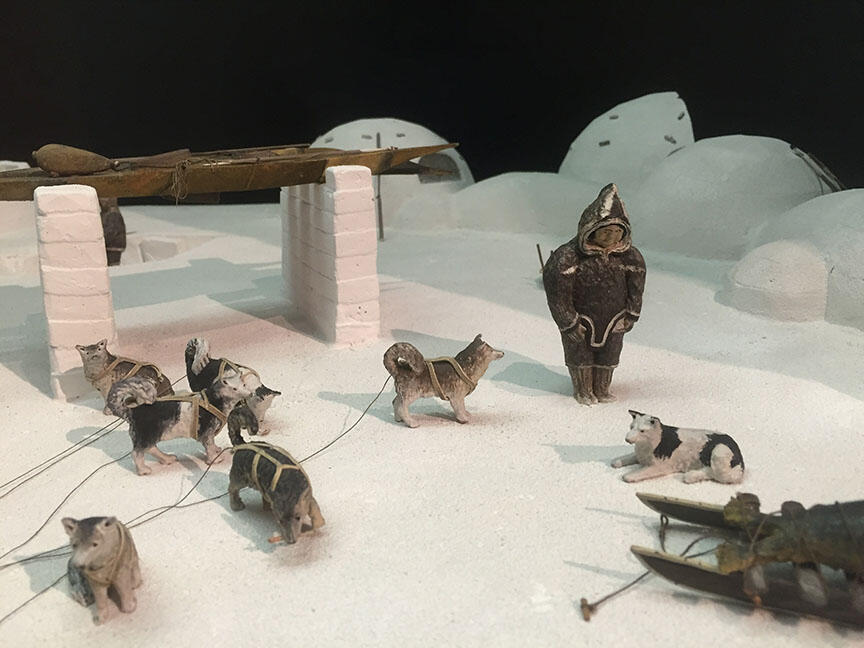
This is what I was thinking about while P laughed at a black and white recording of a Jakartan shadow puppet performance and stood stock still before a sealskin parka that had once belonged to an Inuk child.
He was too young (was he too young) to ask how the coat and boy came to Chicago, and how hot must he have been wearing it in the middle of a midwestern summer; too young to wonder what the Jakartans thought of resurrecting their bamboo homes in the middle of a city thousands of miles away, for the enjoyment of a people and press prone to equating size and manners with childlike docility.
The exhibit spoke to these competing views – but only if you read carefully. Maybe it was all fine. The puppets were humorous. The beading appeared to have been done by the tailor of gloucester’s mice.
We completed the round of the world’s fair. P asked if we could go to the natural history museum; he wanted to see the sea monsters exhibit again.
Anglerfish, by the way: did you know the majority of them are under two inches?!
III: New Material
One way in which 2024, geopolitically, ethically, horrid, was, personally, not all bad: I added four volumes to my slim list of Books I Go on About (and Press Unbidden into Hands).
Here they are, in alphabetical order:
The writing in All Fours is strong, descriptive – but that’s not what stuck with me; what stuck with me were the relationships, particularly the relationship between the narrator and her husband; how it shifted dramatically within the story because it had already shifted gradually before it. I liked that the novel was decisive; it was a novel of decisions and their consequences. I did not always like the narrator; though envious of her polyglot talent, I did not, at any point, want to be her. But I liked her boldness, its meticulously constructed fruit.
Babel is an ambitiously imagined denouncement of imperialism – allegorical, often swashbuckling sci-fi in the vein of Phillip Pulman. I loved it for simpler reasons: it’s a campus novel (set in mid 19th century Oxford), and venerates language and translation.
- On the campus + language vein – I loved Daisy Hilyard’s short story, Revision, published recently in The New Yorker; the payoff is sharp, and (to me) surprising, and there are some lovely asides on Chaucer (whose favorite flower was the daisy), and middle english. In college, I took a course on the novels of the middle ages; the Canterbury Tales were my favorite.
All Fours and Babel are books I recommend selectively, on the basis of setting and plot. Great Expectations and Small Rains, I’d recommend to everyone.
Great Expectations reads like a memoir; it has the memoirist’s capricious elisions and divulgences; because it is written from a distance, elements that might, in a novel, serve as key plot points (eg: becoming a father at nineteen) are bulleted; we get a different coming of age: the dawn of a critic, ambivalently participating in the birth of a myth. The narrator, for much of the book, is a staffer on the ‘08 Obama campaign. That the myth is our forty fourth president feels not only unexpected but transgressive. “Despite his veneer of rationality [Obama] could access a surreal mysticism that I recognized from my childhood and had never managed, in the end, to like,” he writes, listening to the candidate’s speech after the New Hampshire primary (never has concession sounded so much like victory).
Great Expectations is clear-eyed – and this is true of all its characters, including the narrator himself (like i said; it is a novel of ambivalence; also of pragmatism, of riding out the tide – why not?); but it is not cynical. Myth is essential to winning the presidency; what stands out in Obama’s is the contrast between the operatic, open HOPE of the candicacy and the exacting choreographies of its operative.
[Great Expectations was not on President Obama’s 2024 reading list.]
I have an affinity for storied and privileged milieu, rendered critically, by the outsider there by dint of sheer skill. The critical eye is what makes it, for me – all those hushed thickets and bracken and hearty, casual firsts are decay and lassitude, endless boredom, hollow wit, uncomfortable places to sit. To sit uncomfortably and be bored and slake the boredom with drink and gossip and horses, horse races literal and political, but races just the same: a good class novel makes clear the stakes of all this silliness without letting the silliness off the hook.
A colleague, hearing me go on and on about The Line of Beauty late one night in an emptying midtown bar, suggested I try Garth Greenwell. Greenwell’s first two novels, and, in particular, his first, were, like Line of Beauty and The Swimming Pool Library, novels in which the central relationships were imbalanced: wealth versus poverty; mobility versus status – but Greenwell, he felt, grappled with the imbalance more honestly.
I wrote down the name with slow precision, still stuck on what my colleague had said about Hollingsworth, and what that said, really, about me; my own blindness. And then perhaps a week later, Alex Schwartz recommended Greenwell’s latest, Small Rain, to a caller on the Critics at Large podcast, and a few weeks after that, I walked into the Harvard Bookstore with P, trailing genuine if floundering Peabody-induced agita, and there it was in french blue on one of the new hardback tables, right beside Daniel Lavery’s Women’s Hotel.
I bought both, along with John McPhee’s Oranges. P had to have a baldly inappropriate book of faerie anime; absolutely not, I said, but only as the cashier paged through it, and I was barely able to appease my by then deeply invested son with the latest Captain Underpants, technically appropriate but only marginally better.
But anyways, when you see an orange that is entirely orange apart from one dark green section, or vice versa, it’s called a chimera, and Small Rain has the best writing I’ve read all year. The best writing is, if not objective, immutable; I don’t forget great writing, which is why I still go on and on and on about Hollingsworth…
********
Small Rain drops you into the narrator’s head during the course of a week he spends critically – and at first, nearly catastrophically – ill in the ICU of a hospital in Iowa City during the early autumn of 2020. The narrator is a poet and teacher in his early forties; in the very beginning of the book, he believes he is not as excited by this phase of life: settled, for years, with his spouse, another poet, whom the narrator met when he was adjuncting at the university. This changes; quickly and deeply: Small Rain is a story about the clarity of calamity: the narrator is repeatedly told that the situation he finds himself in is cause to focus on what really matters, and that is what the book is really about. A reckoning for love and art.
The hospital experience is rendered in minute closeup: titration, the different types of ivs, the blood pressure cuffs and contrast dye, the feel of the sheets and the way one of the nurses makes the bed, the resolute black patches the monitors leave behind. Noticing, observing can be a way of maintaining some semblance of agency.
But still, all the close depiction of medical equipment and medication, the specific universe of the hospital, it could have felt self-indulgent. It could have gone Delillo, listing things, swerving in and out of the present and the past, action and distraction. But this novel blooms: here into Madrid in high summer, surrounded by the narrator’s partner’s family; here into a five thousand word tribute to a thirty-four word poem; here into the similar origins of a shared love between the narrator and one of his early nurses for a 16th century lutist.
The only technologies I knew anything about were antiquated, unnecessary technologies: iambic pentameter, functional harmony, the ablative absolute. They were the embellishments of life, accoutrements of civilization, never the necessary core – though they were necessary to me, I thought, no matter how sick I might be they were still necessary to me.
It is a hopeful novel; most people are good, is the message; in the hospital, the nurses and aides go to lengths to maintain their patients’ humanity, and many of them have the capacity to surprise.
******
It would have been ideal, really, to end the year with Small Rain, and instead I went and squeezed O Caledonia in, enticed by Ali Smith’s clever promise on the front cover: “one of the best least-known novels of the twentieth century.” Here, optimism trades for calvinism: man is bad, cold and separate; women are inferior. What solace is to be had lies in nature, animals, and art. But the writing – it called to mind Kevin Prufer on the Cleveland poet and composer Russell Atkins: “A flinty meanness lives in his work, that sense of a hugely intelligent mind always a little at odds with its surroundings.”
In other words, this is no vascular prose. Though rapturous about Auchensloch, the old, cold family seat – Macbeth’s house – with its thickets of azalea and climbing roses, it is elsewhere wrathful, full of disdain, as befits a gothic novel whose sixteen year-old protagonist is first introduced to us under a moonlit stained glass cockatoo, “oddly attired in her mother’s black lace evening dress, twisted and slumped in bloody, murderous death.”
But it is a prickly wonder of a book. A brilliant, ill-loved child who loves the subjunctive tense and her cross-beaked jackdaw and delights in the family cat’s transformation of her doll buggy into an ossuary, who avenges a toxic guest by shoving him into a patch of poisonous flowers and survives her cloistered, sports-mad boarding school by daydreaming – what’s not to like?
I recall advice given me years ago, on the danger of opening a novel with a main character’s death: the reader has had no chance to care about the character. Give them a chance to, the editor told me. But I immediately cared for Janet, and held my breath for chapter after chapter, imagining the acts a three, four, eight, ten year-old might mistakenly commit to warrant an unmourned death.
Back to Atkins, gothic, more unusually so:
Palling beyond hedges at the lean of trees,
We left you Larenuf, done, dead, ceremonied.
IV: Ancora
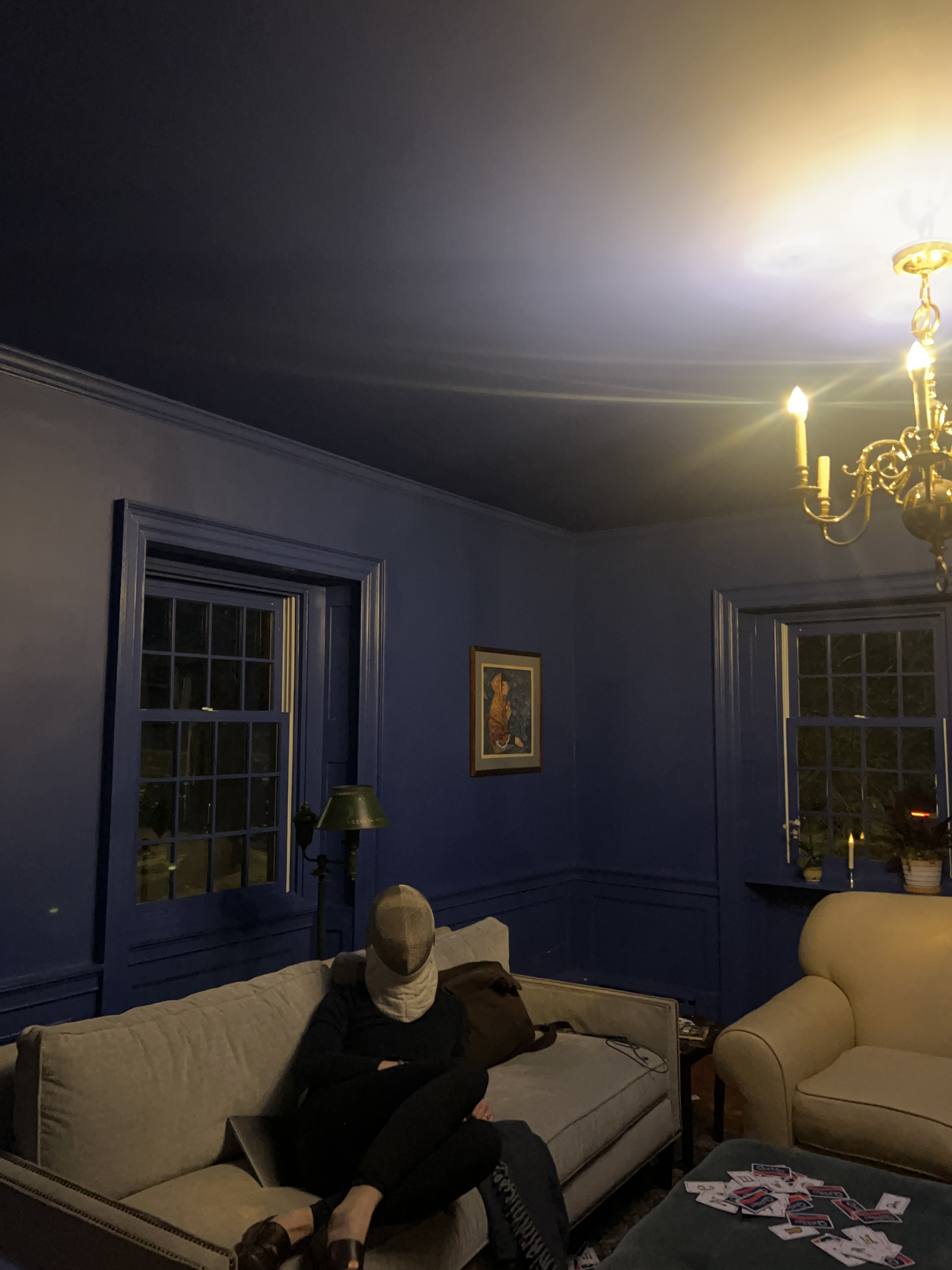
It’s a new year. Brady helped me shunt the large, blue bookcase that has for four years held paint cans and mismatched terracotta pots into my office. I tidied up the odds and ends of christmas wrapping – tippets of cranberry marble paper, snippets of velvet. The big dark blue shelves bloom the little light blue room.
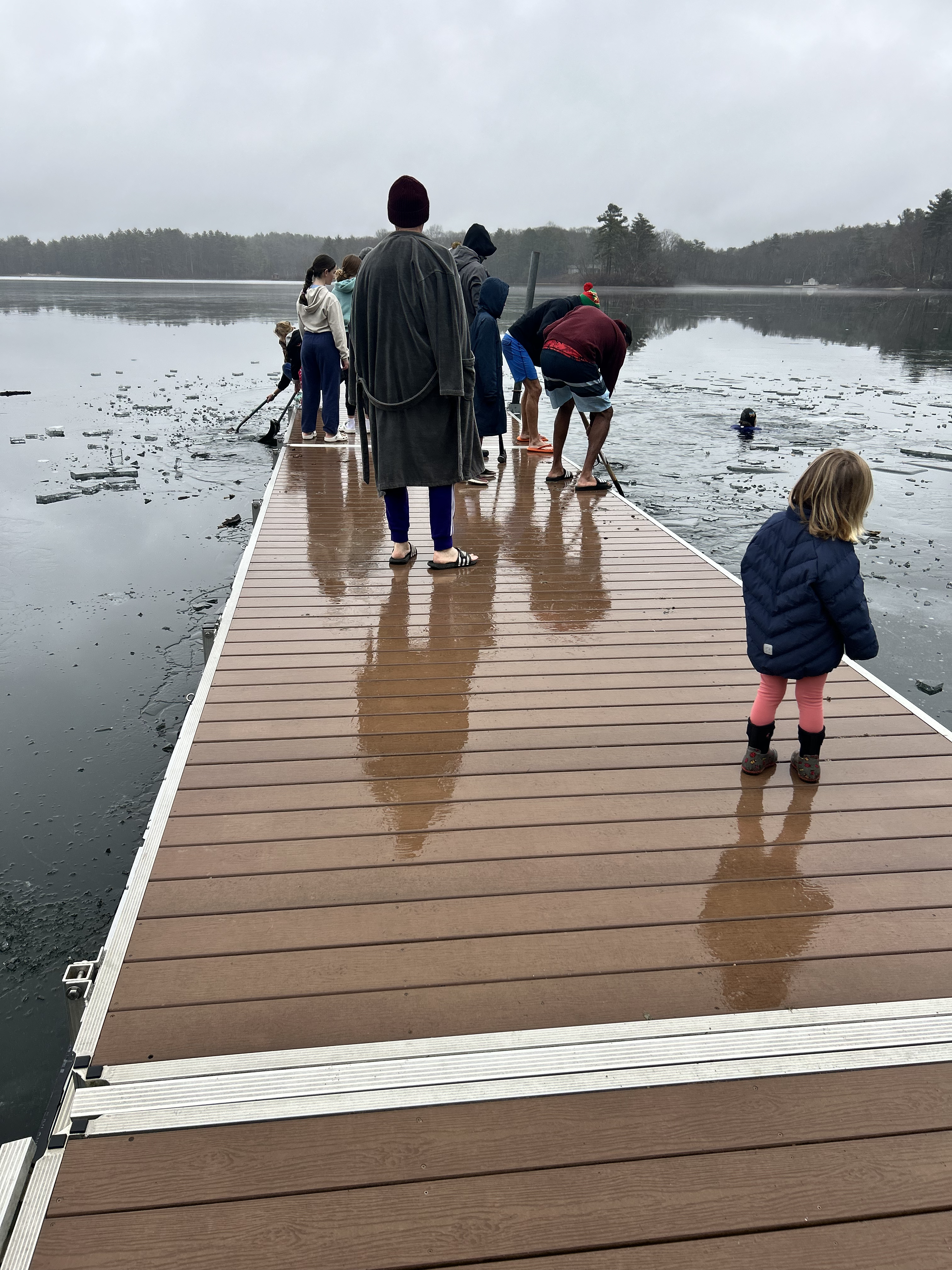
It is mizzling, off and on, and the lake is loud with the clang of shovels breaking up the ice. The kids watch the imminent polar bears with fascination and envy. The boys are handed shovels; little Ottelie makes out with a heavy rake. The ice shards are glass-clear; no living things to smudge them.
A new year and at night, the sliver of moon dangles unnaturally low; venus lower still. Jupiter shining like broken glass; like a splintered solitaire; radial shards.
Mars is sullen, an ember going out. I associate Mars with Elon Musk and four hour podcasts and am predisposed to calling it sullen.
the spangles / that sleep all the year in a dark box / dreaming of being taken out and allowed to shine
(one dark box shuts and another opens)


Leave a Reply